Georgia Productions Remain Steady as Competition Heats Up

Actors Greg Germann and Ramón Rodríguez on the set of “Will Trent.” Like the rest of the series, season four of the hit TV show filmed on location across the state. It also employed more than 900 Georgia crewmembers and spent more than $500,000 on construction supplies.
The film and entertainment industry is evolving.
Production budgets have declined industrywide; the industry is increasingly globalized, adding complexity not only among states and competing tax incentives but also across borders, time zones, and oceans; distribution platforms have proliferated, and digitalization and AI have disrupted the industry. Challenges from organized labor actively working to keep productions from choosing to film in Georgia are an additional hurdle. Yet through all that change and disruption, the industry in Georgia remains steady, continuing to support jobs and drive economic prosperity across the state.
In fiscal year 2026 (July 1, 2025-June 30, 2026), the Georgia film office reported 280 total productions, a slight increase over FY25, including tentpoles like the upcoming “Superman” sequel and returning hit shows. Thanks to Georgia’s overall value, stable incentive and deep and experienced crew base, the industry continues to choose Georgia, spending $2 billion in the state during FY26*.
Georgia’s signature friendliness, wealth of creative industries, and relationship-driven approach continue to play a key role in making Georgia filming experiences so unique. These factors, combined with a new post-production tax credit, help Georgia stay competitive amid increased competition from other markets.
Film and television projects support direct industry jobs, such as film crews and small business suppliers, as well as indirect jobs. Local restaurants, hotels, and shops also benefit as they are frequented by industry personnel. Additionally, locales made famous on big and small screens attract tourists who often spend additional dollars on meals, lodging, and retail during their visits.
The best value
Georgia’s complete package for the film industry is built on a foundation more than 50 years in the making. The state’s film infrastructure is fully developed. Large and small productions benefit from new, state-of-the-art stages and support-service professionals who understand the industry.
Turnkey solutions are paired with access to anywhere in the world from Hartsfield-Jackson Atlanta International Airport, making logistics a breeze. A stable incentive and state legislature committed to the industry’s success, including a long history of keeping the application process easy and transparent, contribute to unmatched value for productions.
Established crews bring an unrivaled blend of skill and southern hospitality to every job. Actor Julia Garner, who filmed the hit “Ozark” series in Georgia, was back in the state again to film “Weapons,” a thriller from Warner Bros. Entertainment that added sizzle to the summer box office in 2025.
“I am always a big believer that people make a city, and the people here are really interesting, they’re really curious, and they also take their job seriously,” Garner said. “They’re just really kind, good people. So, I love shooting here.”
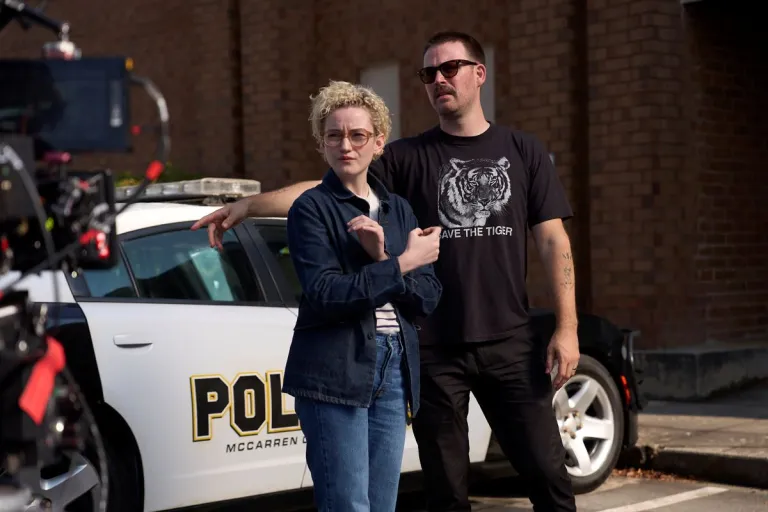
Actor Julia Garner with director Zach Cregger photographed on the set of “Weapons,” which hit theaters last summer.
Something that’s harder to quantify, but uniquely valuable? The on-the-ground support network that’s available statewide. Across Georgia, communities are well-equipped to help make the filming process as smooth as possible. Local Camera Ready® liaisons help connect location scouts and film crews with everything they need to stay on track and on budget – at no cost to productions.
Episodic throughline
More than 440 television and streaming episodic productions called Georgia home over the last three fiscal years, contributing to industry activity and boosting local economies.
The state’s history with long-running shows like “Stranger Things,” which recently aired its final season, and “The Walking Dead” and “The Vampire Diaries” made the state a popular home base. Likewise, new multi-season favorites like “Will Trent,” “Chad Powers,” and “Beyond the Gates” have joined the roster alongside Tyler Perry Studios shows like “Ruthless” and “All the Queen’s Men.”
Studios have chosen Georgia for consecutive seasons of episodic productions, a distinction reflected in the number of Georgia-made series earning high views and accolades. Nine Georgia-lensed shows have earned 27 Emmy® nominations in 2026, with “Beyond the Gates” snagging 15 Daytime Emmy® nominations alone.
An indie renaissance
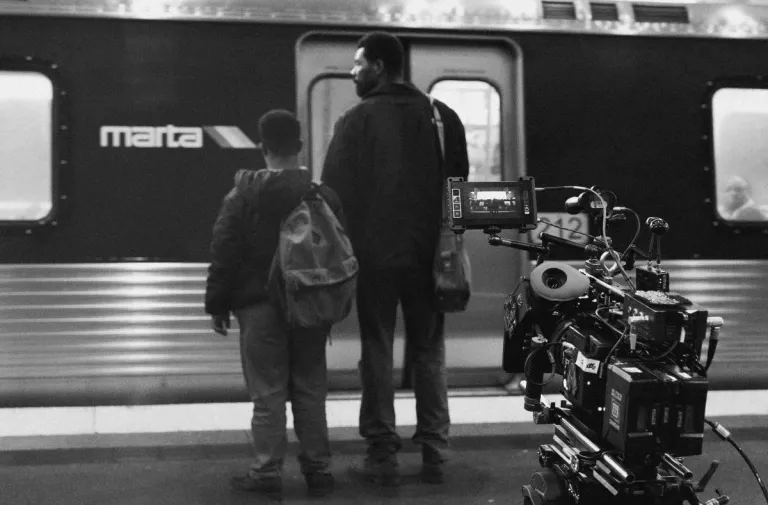
Written and directed by Atlanta native and Morehouse alum David Fortune, the independent film “Color Book,” filmed entirely in black and white, was brought to life entirely in Georgia, showcasing the talent and resources that make the state a full-service filmmaking destination.
Independent films are experiencing a massive resurgence, and Georgia is proud to be part of that story. Independent productions in Georgia were up 83% over the prior year.
The surge in indie film popularity is in part due to their unique narratives and fresh perspectives. Lower budgets don’t necessarily mean lower profits anymore, as many recent low-budget indies have become massive box-office hits. In Georgia, independent producers are using innovative methods and taking advantage of the breadth of Georgia’s creative industries. In addition, production companies may be eligible for the 20% Film Tax Credit if they meet the minimum $500,000 spend threshold by aggregating multiple projects within a single tax year.
Indie films are also driving local film festivals, which continue to grow the industry and provide education and networking opportunities for burgeoning filmmakers.
A ‘recurring cast’ of actors and producers
TV and episodic productions aren’t the only ones choosing Georgia – actors and producers enjoy Georgia’s high quality of life for visitors and residents alike, and many make the state their home. Big names like Dwayne Johnson (aka “The Rock”), Jason Bateman, David Harbour, Steve Harvey, Glen Powell, Millie Bobbie Brown, James Gunn, Joana Garcia Swisher, Julia Garner, and Tyler Perry, among others, have homes, studios, or have filmed multiple projects in the state, taking advantage of the lower cost of living.

John Cena and James Gunn on the set of “Peacemaker.”
“Superman” writer and director James Gunn, who said he would continue to choose Georgia for its talented crews, produced season two of HBO Max’s series “Peacemaker” in Georgia after filming season one in Canada. The series was shot on location in Fayetteville, Dallas, Savannah, and at Trilith Studios, and actor John Cena said Georgia has all the resources productions need.
“Whatever Georgia doesn’t offer from a landscape perspective or a location perspective, you just build it in here, you lean back on the infrastructure,” Cena said of the studio.
“Whatever Georgia doesn’t offer from a landscape perspective or a location perspective, you just build it in here, you lean back on the infrastructure,” – John Cena
Tourism-inspiring entertainment
Georgia is no stranger to the lasting effects of filming in communities.
As one of the largest productions to ever film in Georgia, “Stranger Things” showcases how one show can permanently and positively impact towns, workers, and vendors. In addition to a decade of spending at local businesses during production, purchasing items like lumber and foam and necessities like catering and lodging, the show continues to bring scores of visitors to iconic locations across the state, from Jackson to Douglasville to Rome.
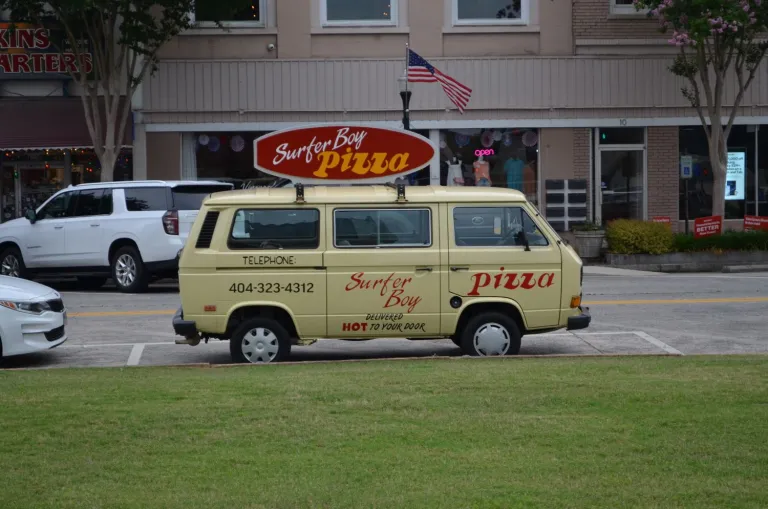
“Stranger Things” was one of Georgia’s largest-ever productions, filmed at more than 100 locations, including many in the city of Jackson. Photo courtesy Grace Booker.
A new series burst onto screens this January, shining a new light on the north Georgia town of Dahlonega, known for being the setting of many Christmas films. Netflix’s “His & Hers,” a psychological thriller, broke streaming records and brought renewed attention to the area and its small-town feel. Executive Director of the Dahlonega-Lumpkin County Visitors Bureau, Sam McDuffie, worked with the film’s producers and location scouts to source the best backdrops for the miniseries.
“There are probably people all over the country that are now familiar with Dahlonega from that TV show,” McDuffie said in an interview with Atlanta Magazine.
And recently, Savannah staple Leopold’s Ice Cream experienced a viral moment following the release of “Cape Fear,” an Apple TV series. A surge in demand for a branded T-shirt worn by one of the show’s characters reflected the immediate impact on audiences and the long-tail effects on small businesses. Leopold’s Ice Cream wrote on Facebook, “Our team was wondering why we were getting so many orders for our classic Navy Leopold’s Shirt...and then, when we saw the opening scenes of ‘Cape Fear,’ we realized why!”
The series also spotlights other Savannah favorites, including Coastal Empire Beer Co., Savannah Coffee Roasters, and even a nod to The Savannah Bananas. It’s a great example of how productions filmed in Georgia can create meaningful exposure for local communities even after filming wraps.
“Our team was wondering why we were getting so many orders for our classic Navy Leopold's Shirt...and then, when we saw the opening scenes of ‘Cape Fear,’ we realized why!” – Leopold’s Ice Cream, Facebook
A trusted production partner
While global forces reshape the film and TV industry worldwide, Georgia’s unmatched value and reputation as a trusted production partner endure. Its dependable production ecosystem and industry track record distinguish the state from the competition. For more information about the film industry in Georgia, visit Georgia.org/film.
*The Georgia Film Office, a part of the Georgia Department of Economic Development, reported that film and television productions spent a combined $2 billion in the state during fiscal year 2026. That includes 280 productions, represented by 13 feature films, 77 independent films, 130 television and episodic productions, and 54 commercials. Studios and support service companies, which do not benefit from the Film Tax Credit, provide additional infrastructure and jobs not included in productions’ direct spend.
Related Articles

June 16, 2026
June 11, 2026


April 29, 2026

April 29, 2026
